
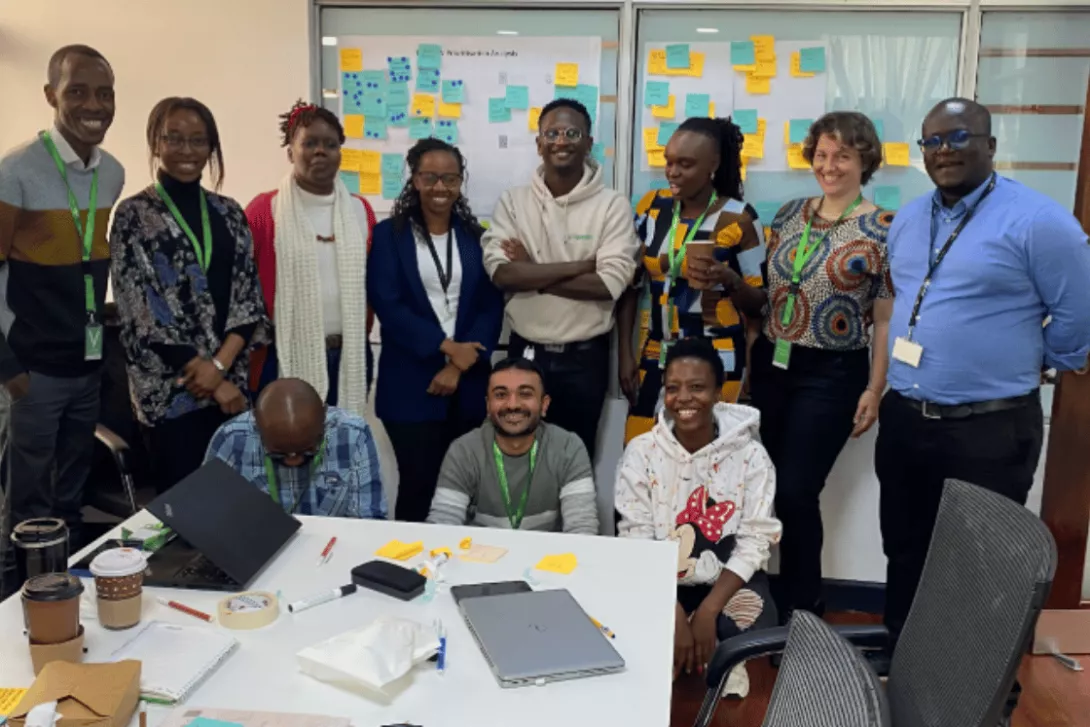
This case study explores YUX’s contribution to the research featured in GSMA’s Pochi la Biashara and Women Micro-Entrepreneurs in Kenya: From Insight to Action report. Read the full GSMA report.
Introduction
Women micro-entrepreneurs are a significant part of Kenya’s economy. According to the GSMA report, 74.4% of working women in Kenya are self-employed, compared with 57.4% of working men. Yet women micro-entrepreneurs are less likely than their male counterparts to use digital financial services for their businesses and tend to experience barriers such as low digital confidence and safety and security concerns more acutely.
Against this backdrop, YUX collaborated with GSMA on an eight-week design sprint to explore how Safaricom’s Pochi la Biashara could better support women micro-entrepreneurs in Kenya. The sprint combined research, ideation and rapid prototyping to identify user-centred opportunities to improve the product experience and strengthen its value for women micro-entrepreneurs.
The design sprint, conducted between March and May 2024, formed part of a broader multi-year engagement between GSMA Connected Women and Safaricom focused on exploring approaches to increase the adoption and use of Pochi la Biashara among women micro-entrepreneurs.
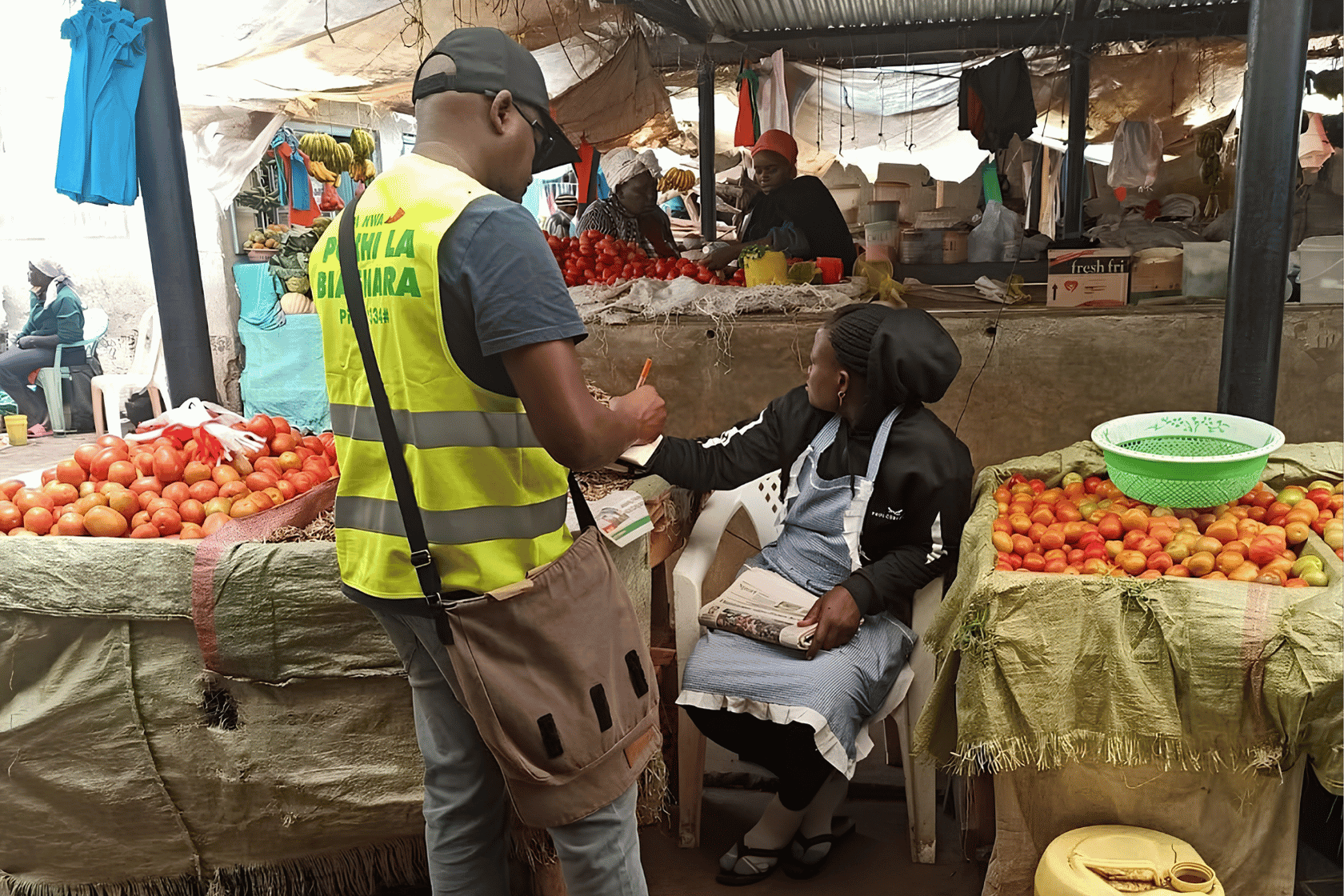
A YUX Researcher engaging with a woman micro-entrepreneur at her market stall.
What is Pochi la Biashara?
Pochi la Biashara is a Safaricom merchant wallet designed for micro-entrepreneurs. It allows merchants to receive payments from customers while keeping their business money separate from their personal funds through a wallet linked to their M-PESA account. Safaricom launched the product in 2020 in response to merchant pain points including the difficulty of separating personal and business money and frustration around customer payment reversals.
Pochi can be accessed through USSD, the M-PESA app/My OneApp and a SIM toolkit. Its features include separate business and personal wallets, Lipa na Pochi payments, airtime sales, direct withdrawals through M-PESA agents, protection from customer payment reversals, mini-statements for transaction tracking, the Taasi loan for working capital and Ziidi for savings and investment.
These features are particularly relevant because the research consistently identified three important pain points among women micro-entrepreneurs: separating business and personal finances, concerns about customer payment reversals, and privacy and harassment concerns.
What We Set Out to Understand
The design sprint used a human-centred research approach to understand how Pochi was being used, assess early business outcomes, and test potential product improvements across urban and rural contexts.
The design sprint sought to identify barriers and opportunities for women micro-entrepreneurs using Pochi. It also developed personas based on factors such as confidence, digital literacy and business experience, helping the teams better understand different user segments. These insights were then translated into testable product and marketing ideas with Safaricom to help shape Pochi’s value propositions.
This was important because women micro-entrepreneurs are not a single, uniform customer group. The research found differences in their needs, perspectives and priorities, and these can also evolve as users gain more experience with a digital financial service.
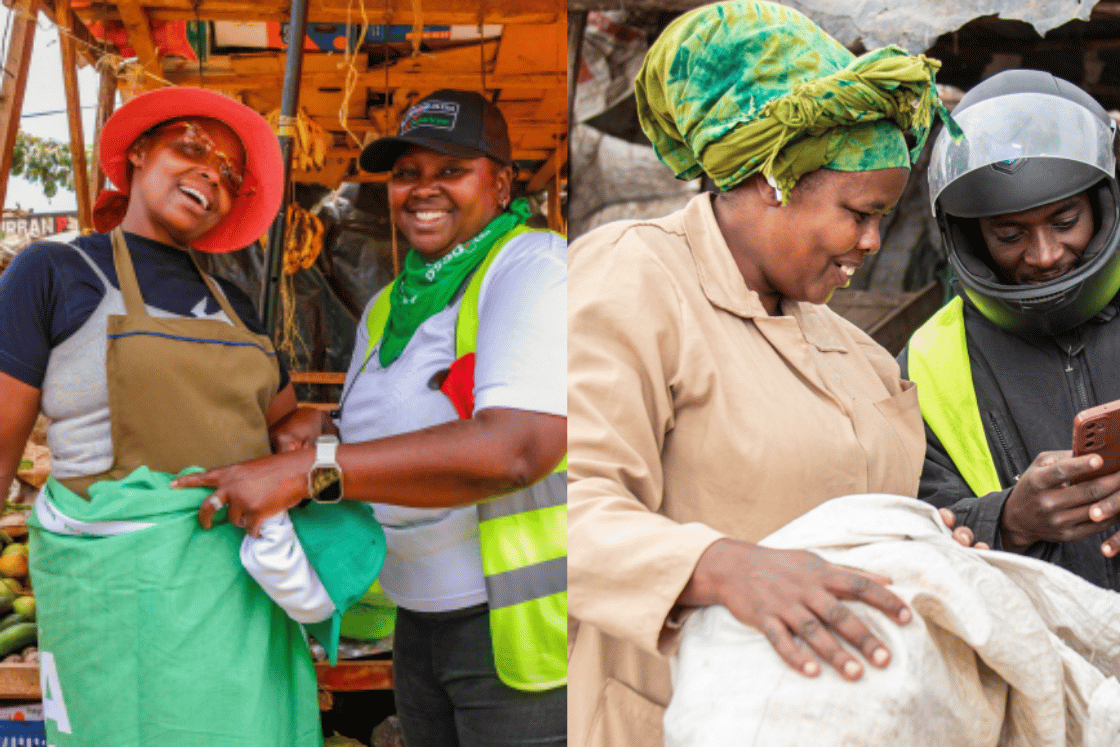
Safaricom staff with a woman micro-entrepreneurs in Kenya, as featured in the GSMA report Pochi la Biashara and Women Micro-Entrepreneurs in Kenya: From Insight to Action.
Research and Recruitment
The design sprint was conducted through four sequential phases between March and May 2024.
The first phase focused on desk research and preparation. Existing Safaricom and GSMA data were reviewed, research objectives and protocols were developed, stakeholders aligned around priorities, and recruitment criteria and research tools were finalised.
The qualitative research phase then involved 42 micro-entrepreneurs - 30 women and 12 men - as well as five customers. Fieldwork took place across Nairobi and Nakuru in both urban and rural settings, including Gikomba, Dagoretti Corner, Kawangware, Nakuru CBD and Njoro.
The participants represented sectors including clothing, food and beverage, grocery, retail, services and transport. Overall, 64% of participants were from rural areas and 36% from urban areas.
What We Learned
Several important insights emerged from the design sprint and were later reinforced by the wider research presented in the GSMA report.
Trust begins with solving real pain points. The research repeatedly highlighted the importance of financial control, protection from payment reversals and privacy. Features addressing these concerns helped women feel a greater sense of control, safety and financial discipline.
Awareness does not necessarily mean usage. Women could know that a Pochi feature existed without necessarily understanding or using it. For example, among new users surveyed at endline, 48% had heard of the mini-statement feature but only 8% had used it. Similarly, 71% knew about Lipa na Pochi while 53% had used it. Qualitative insights from the design sprint also indicated mixed understanding of Pochi's features and their relevance to day-to-day business.
Peer influence matters, particularly among women. Both the design sprint and later retrospective research found that women were more likely to act on information shared by someone they trusted, particularly another businesswoman. In the subsequent longitudinal study, 49% of new Pochi users said they first heard about the product through friends or family, while 21% identified a recommendation from someone they knew as important to their decision to adopt it.
Privacy and safety can directly affect how women engage with a product. Some women were concerned about their mobile numbers appearing on Pochi stickers or payment notifications because customers could use this information to contact or harass them after business hours. Other merchants, however, valued having their number visible because customers could contact them for follow-up orders or payments.
Hands-on support can turn understanding into confidence. During design sprint testing, myth-busting demonstrations by Safaricom field agents helped clarify misconceptions, including the belief that payments or withdrawals could not be made directly from Pochi. Walking women through features on their own phones helped improve understanding and build trust.
These findings reinforced an important principle: designing for women micro-entrepreneurs goes beyond making a product available. It also requires understanding how trust, confidence, safety, experience and access shape the way a service is adopted and used.
Turning Research into Product Opportunities
After the initial research phase, insights were synthesised into key opportunity areas.
A two-day design and product iteration workshop was then held with Safaricom and GSMA teams. During the workshop, the teams shared findings from the field, identified priority challenges and co-created potential new journeys and concepts.

YUX, GSMA and Safaricom teams working together during the design and product iteration workshop to translate field research insights into priority opportunity areas and potential product concepts.
The process moved deliberately from understanding users to exploring possible solutions. Low-fidelity prototypes, including both paper and digital concepts, were developed so that ideas could be tested with the people they were intended to serve rather than remaining assumptions within the project team.
Testing the Concepts
The final phase of the sprint took the concepts back into the field.
Concept testing was conducted with 25 micro-entrepreneurs and nine customers across eight locations in Nairobi and Nakuru. Their feedback was used to refine the proposed solutions.
The research process then concluded with a final presentation and strategy discussion with Safaricom leadership, followed by preparation of the final report and dissemination materials.
This iterative approach - research, co-creation, prototyping and testing - helped ensure that ideas were grounded in the experiences of the merchants themselves.
From Insight to Action
The design sprint was part of a wider process of learning and optimisation around Pochi la Biashara.
Safaricom continued gathering insights through customer feedback, trade representatives, call centres, its own customer data and GSMA-supported research. These sources highlighted challenges including limited use of Pochi's range of features, continued safety and privacy concerns and difficulties accessing working capital.
In response, Safaricom continued adapting both the product and its go-to-market approach. This included equipping its trade representatives to provide hands-on onboarding and demonstrations, using targeted customer communications to encourage use of additional features and, in some cases, using incentives to encourage learning by doing and sustained usage.
Privacy and safety also informed product changes. Safaricom removed mobile numbers from payment SMS notifications for merchants and customers and, at the time of the report, was working on an additional Pochi feature intended to strengthen safety and privacy.
Following the endline study, Safaricom continued enhancing Pochi through targeted onboarding, clearer communication around core features and optimisation of customer value management campaigns. The company also planned to build on the research through greater awareness of high-value features, incentives to encourage regular use and continued enhancement of product features.
What the Broader Research Tells Us
The subsequent research documented encouraging outcomes among women using Pochi.
Women micro-entrepreneurs who became new users reported benefits including increased savings, higher sales and income, greater investment in their businesses, improved financial tracking and more intentional spending.
Pochi's growth among women was also significant. Between December 2024 and December 2025, the number of women actively using Pochi grew by approximately 92%, compared with 78% among men. By December 2025, women represented just over 52% of active Pochi users, equivalent to more than 900,000 users.
These figures reflect the broader engagement described in the report rather than the design sprint alone, but they demonstrate why understanding the needs of women micro-entrepreneurs is important for both inclusive product design and business growth.
Our Reflection
One of the clearest lessons from this work is that successful digital financial services are not built around technology alone.
The GSMA research highlights the importance of grounding product design in real customer pain points, understanding how needs differ between user segments, pairing awareness with hands-on education, investing in trusted agent networks, leveraging peer relationships and designing intentionally for safety, privacy and accessibility.
For us, the design sprint demonstrated the value of going into the markets, listening to women micro-entrepreneurs, turning those insights into tangible concepts and bringing those ideas back to users for testing.
The result was not simply a collection of research findings. It was a process of moving from insight to action, using human-centred research to help identify ways a digital financial service could become more relevant, trusted and useful for the women running businesses across Kenya.
A huge thanks to all of the team members involved in making this happen!
YUX Project Leadership: Rajay Shah, Sasha Ofori, Camille Kramer
Research Team: Melissah Weya, Francis Mwangi, Sheila Zubeda, Simeon Kamunde
GSMA Lead: Adem Esther
Pochi Lead: Nora Mbaya (Growth), Kelvin Mutiso (UI/UX)